
Under the Surface: Trusting God When You Cannot See Him Working
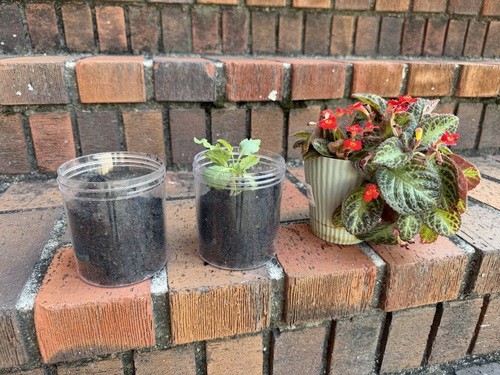
Looking at the picture above from left to right.
The first cup looks like nothing more than dirt. A seed has been planted beneath the surface, but you cannot see it. There is no stem, no leaf, and no visible evidence that anything is happening. The second cup has a tiny sprout beginning to push through the soil. Something is clearly happening now. The third has a plant that has obviously been growing for a while.
Here is the question: Which cup is growing?
The easy answer might be the second and third cups because those are the ones where we can actually see growth. The better answer is that all three could be growing. One is just growing in a place we cannot see yet.
That first cup might look like nothing but dirt from our perspective. Underneath the surface, the seed could already be opening. Roots could be pushing downward. Life could already be developing. Our inability to see what is happening does not mean nothing is happening.
Life with Jesus can feel a lot like that first cup.
There are seasons when you pray, but nothing seems to change. You open your Bible, but you do not feel like you are growing. You ask God to work in your family, yet the situation stays the same. You pray for a friend who is far from Jesus, but they still seem uninterested. You fight the same temptation again. You ask God for direction, but the answer does not come.
Eventually, the question starts creeping into your mind: “God, are You doing anything?”
Mark 4:26–29 gives us a picture for those seasons. Jesus describes the kingdom of God through something incredibly ordinary. A farmer walks into a field, scatters seed on the ground, then waits. The story is only a few verses long, but tucked inside it is a truth we desperately need when we cannot understand what God is doing.
Just because you cannot see God working does not mean God is not working.
Plant What God Has Given You
Jesus says, “The kingdom of God is as if a man should scatter seed on the ground” (Mark 4:26). The farmer has a responsibility. He takes the seed he has been given and puts it into the ground. He cannot force the seed to grow. He cannot reach beneath the soil and manufacture life. He can simply plant.
The same is true in our lives. There are things God has called us to do, but there are also things only God can do. We can share the Gospel, but we cannot save someone. We can pray for our children, but we cannot change their hearts. We can invite someone to church, but we cannot make them respond. We can faithfully teach Scripture, but we cannot produce spiritual transformation in another person. That distinction matters because we can exhaust ourselves trying to accomplish something God never gave us the power to accomplish.
Our responsibility is faithfulness. The results belong to God.
Sometimes planting looks incredibly ordinary. It is inviting a friend to church. It is telling someone what Jesus has done in your life. It is praying for your children again even when you have prayed the same prayer hundreds of times. It is opening your Bible on a morning when you do not feel particularly spiritual. It is choosing obedience when nobody is watching.
We often become so consumed with results that we stop planting. We wonder what happens if they say no. We worry about what happens if nothing changes. We question whether it matters if nobody notices. Faithfulness keeps planting because obedience does not depend on our ability to guarantee an outcome. We plant what God has placed in our hands, then trust Him to accomplish what only He can accomplish.
Wait When You Cannot See It
Jesus continues the parable by saying the farmer “sleeps and rises night and day, and the seed sprouts and grows; he knows not how” (Mark 4:27). I love that picture because the farmer plants the seed, then he goes to bed. He gets up the next morning and continues living. Night comes again. Morning comes again. The process continues while something beneath the soil is changing. The farmer cannot see it. He does not fully understand it. He certainly does not control it. Something is happening anyway.
That is where this parable becomes incredibly personal because most of us struggle with waiting. We live in a world built around instant results. We track packages from the moment we order them. We get irritated when a website takes too long to load. We send a text and wonder why someone has not responded five minutes later. We post something and immediately check who has seen it.
That expectation can quietly creep into our relationship with God. We pray, then expect something to happen. We read Scripture for a few days, then expect ourselves to feel completely different. We invite someone to church once, then assume they are never coming because they said no. We ask God to change a situation, then become discouraged when the answer does not come on our timeline.
God does not always work according to our demand for immediate results.
Go back to that first cup. From the outside, it is still just dirt. If the seed is beginning to open underneath the soil, you cannot see it. If the roots are beginning to spread, you cannot see them. If life has started developing inside that seed, you cannot see that either.
The question is not whether you can see it. The question is whether something could be happening even when you cannot.
Do not mistake “I cannot see it” for “God is not doing it.”
Maybe you have been praying for someone you love to know Jesus. Keep praying.
Maybe you have started reading Scripture but feel like you barely understand what you are reading. Keep reading.
Maybe you are fighting a sin that once completely controlled you, but you are discouraged because the temptation has not disappeared. Keep fighting.
Maybe you are trying to follow Jesus faithfully, yet you look around and feel like everyone else is further ahead. Keep following.
You do not know everything God is doing under the surface.
Some of God’s most important work in our lives happens where nobody else can see it.
Nobody applauds the quiet morning when you open your Bible. Nobody celebrates the moment you choose not to click something you know you should not see. Nobody gives you recognition for forgiving someone who hurt you. Nobody knows about every prayer whispered when you are alone.
Those moments are roots. We love visible fruit, but visible fruit depends upon invisible roots. A healthy tree does not begin with branches stretching toward the sky. It begins beneath the dirt, developing something strong enough to support what will eventually become visible.
The same can be true spiritually. God may be developing convictions today that you will desperately need five years from now. He may be teaching you to trust Him in a small situation because a larger one is coming. He may be deepening your understanding of Scripture long before you realize how much you have learned. He may be using a season that feels painfully slow to grow roots that will hold you steady later. God does some of His deepest work under the surface.
Grow at God’s Pace
Mark 4:28 moves from waiting to growth. Jesus says, “The earth produces by itself, first the blade, then the ear, then the full grain in the ear.”
Notice the progression. First the blade. Then the ear. Then the full grain. Jesus describes growth in stages. The seed does not go into the ground tonight and become a mature plant tomorrow. Growth takes time.
That truth should give us some freedom because we are often frustrated with ourselves for not being where someone else is spiritually. We look at another person and think they know more Scripture, pray better, serve more, or seem closer to Jesus. Comparison makes us overlook the work God is actually doing in us because we are obsessed with what He appears to be doing in somebody else.
Stop expecting full grain when God is growing the blade.
Maybe a year ago you never opened your Bible, but now you are reading it several times a week. That is growth.
Maybe you were once terrified to talk about Jesus, but recently you invited someone to church. That is growth.
Maybe you used to immediately surrender to a temptation, but now you are learning to fight it. That is growth.
Maybe church once felt like something you simply attended, but now you genuinely want to know Jesus. That is growth.
Spiritual growth does not always announce itself. Sometimes you recognize it only when you stop and look backward.
Think about who you were one year ago. Think about what mattered to you, how you responded to difficulty, how you viewed Scripture, how you prayed, how you handled temptation, and how you treated people. God may have done more than you realize.
Do not despise what God is growing simply because it is not finished yet.
Trust God With the Harvest
The parable eventually reaches Mark 4:29, where Jesus says the grain becomes ripe and the harvest comes. The farmer who planted and waited finally sees what was developing all along.
The kingdom is moving somewhere. God is accomplishing His purposes. The waiting is not meaningless. The process is not random. God knows what He is doing even when we do not understand what He is doing. That means we can trust God with the timing. We can trust Him when we see the plant breaking through the ground. We can trust Him when we see only a tiny sprout. We can trust Him when all we can see is dirt.
The Gospel gives us the greatest example of this truth.
Jesus was crucified on a Friday. His disciples watched Him die. His body was taken down from the cross and placed inside a tomb. A stone was rolled across the entrance. Everything they had hoped for appeared to be buried behind it. Saturday came, and the tomb remained closed. Imagine what that day must have felt like for the disciples. From their perspective, it looked like nothing was happening. Their Savior was dead. Their hope seemed buried. Their future made no sense. Sunday revealed that God had not lost control of the story.
Jesus rose from the grave. The tomb was empty. Death had been defeated. What looked like defeat became victory. What looked finished was not finished. What looked hopeless was not hopeless.
The Gospel reminds us that our hope is not found in our ability to make ourselves better. We have all sinned, and we cannot fix the separation our sin has created between us and a holy God. Jesus lived the life we could never live, died the death our sin deserved, and rose from the grave. Salvation comes through repentance and faith in Him.
The same Jesus who walked out of the grave can be trusted when our lives look like nothing more than dirt.
So, Which Cup Is Growing? Go back to the three cups.
One has a mature plant. The growth is obvious. One has a small sprout. The growth is beginning to show. One still looks like a cup filled with dirt.
Which one is growing?
The truth is that we cannot always tell simply by looking at the surface. The cup that appears to have nothing happening could have a seed breaking open beneath the soil. Roots could already be forming. Something could be happening that has not become visible yet.
Maybe right now your life feels like that cup.
You have planted. You have prayed. You have tried to obey. You have waited. You still cannot see anything happening. The temptation is to dig up the seed, give up on the process, or assume God has forgotten you.
Keep planting. Keep praying. Keep opening your Bible. Keep showing up. Keep fighting sin. Keep sharing the Gospel. Keep loving your family. Keep serving when nobody notices. Keep obeying what God has already told you to do.
Faithfulness does not require knowing the outcome. Faithfulness means trusting the One who does.
There will be seasons when you see the blade break through and you can clearly recognize what God is doing. There will be other seasons when you stare at the dirt and wonder whether anything is happening at all. Both seasons require trust.
Plant what God has given you. Wait on what only God can do. Trust Him with the growth.
The next time life feels like nothing more than a cup of dirt, remember the seed. There was a period when something was happening even though nobody could see it. Your inability to see beneath the surface did not stop the seed from growing. The same truth can remind us to trust God. Just because you cannot see God working does not mean God is not working. Sometimes God is doing His deepest work under the surface.
The first cup looks like nothing more than dirt. A seed has been planted beneath the surface, but you cannot see it. There is no stem, no leaf, and no visible evidence that anything is happening. The second cup has a tiny sprout beginning to push through the soil. Something is clearly happening now. The third has a plant that has obviously been growing for a while.
Here is the question: Which cup is growing?
The easy answer might be the second and third cups because those are the ones where we can actually see growth. The better answer is that all three could be growing. One is just growing in a place we cannot see yet.
That first cup might look like nothing but dirt from our perspective. Underneath the surface, the seed could already be opening. Roots could be pushing downward. Life could already be developing. Our inability to see what is happening does not mean nothing is happening.
Life with Jesus can feel a lot like that first cup.
There are seasons when you pray, but nothing seems to change. You open your Bible, but you do not feel like you are growing. You ask God to work in your family, yet the situation stays the same. You pray for a friend who is far from Jesus, but they still seem uninterested. You fight the same temptation again. You ask God for direction, but the answer does not come.
Eventually, the question starts creeping into your mind: “God, are You doing anything?”
Mark 4:26–29 gives us a picture for those seasons. Jesus describes the kingdom of God through something incredibly ordinary. A farmer walks into a field, scatters seed on the ground, then waits. The story is only a few verses long, but tucked inside it is a truth we desperately need when we cannot understand what God is doing.
Just because you cannot see God working does not mean God is not working.
Plant What God Has Given You
Jesus says, “The kingdom of God is as if a man should scatter seed on the ground” (Mark 4:26). The farmer has a responsibility. He takes the seed he has been given and puts it into the ground. He cannot force the seed to grow. He cannot reach beneath the soil and manufacture life. He can simply plant.
The same is true in our lives. There are things God has called us to do, but there are also things only God can do. We can share the Gospel, but we cannot save someone. We can pray for our children, but we cannot change their hearts. We can invite someone to church, but we cannot make them respond. We can faithfully teach Scripture, but we cannot produce spiritual transformation in another person. That distinction matters because we can exhaust ourselves trying to accomplish something God never gave us the power to accomplish.
Our responsibility is faithfulness. The results belong to God.
Sometimes planting looks incredibly ordinary. It is inviting a friend to church. It is telling someone what Jesus has done in your life. It is praying for your children again even when you have prayed the same prayer hundreds of times. It is opening your Bible on a morning when you do not feel particularly spiritual. It is choosing obedience when nobody is watching.
We often become so consumed with results that we stop planting. We wonder what happens if they say no. We worry about what happens if nothing changes. We question whether it matters if nobody notices. Faithfulness keeps planting because obedience does not depend on our ability to guarantee an outcome. We plant what God has placed in our hands, then trust Him to accomplish what only He can accomplish.
Wait When You Cannot See It
Jesus continues the parable by saying the farmer “sleeps and rises night and day, and the seed sprouts and grows; he knows not how” (Mark 4:27). I love that picture because the farmer plants the seed, then he goes to bed. He gets up the next morning and continues living. Night comes again. Morning comes again. The process continues while something beneath the soil is changing. The farmer cannot see it. He does not fully understand it. He certainly does not control it. Something is happening anyway.
That is where this parable becomes incredibly personal because most of us struggle with waiting. We live in a world built around instant results. We track packages from the moment we order them. We get irritated when a website takes too long to load. We send a text and wonder why someone has not responded five minutes later. We post something and immediately check who has seen it.
That expectation can quietly creep into our relationship with God. We pray, then expect something to happen. We read Scripture for a few days, then expect ourselves to feel completely different. We invite someone to church once, then assume they are never coming because they said no. We ask God to change a situation, then become discouraged when the answer does not come on our timeline.
God does not always work according to our demand for immediate results.
Go back to that first cup. From the outside, it is still just dirt. If the seed is beginning to open underneath the soil, you cannot see it. If the roots are beginning to spread, you cannot see them. If life has started developing inside that seed, you cannot see that either.
The question is not whether you can see it. The question is whether something could be happening even when you cannot.
Do not mistake “I cannot see it” for “God is not doing it.”
Maybe you have been praying for someone you love to know Jesus. Keep praying.
Maybe you have started reading Scripture but feel like you barely understand what you are reading. Keep reading.
Maybe you are fighting a sin that once completely controlled you, but you are discouraged because the temptation has not disappeared. Keep fighting.
Maybe you are trying to follow Jesus faithfully, yet you look around and feel like everyone else is further ahead. Keep following.
You do not know everything God is doing under the surface.
Some of God’s most important work in our lives happens where nobody else can see it.
Nobody applauds the quiet morning when you open your Bible. Nobody celebrates the moment you choose not to click something you know you should not see. Nobody gives you recognition for forgiving someone who hurt you. Nobody knows about every prayer whispered when you are alone.
Those moments are roots. We love visible fruit, but visible fruit depends upon invisible roots. A healthy tree does not begin with branches stretching toward the sky. It begins beneath the dirt, developing something strong enough to support what will eventually become visible.
The same can be true spiritually. God may be developing convictions today that you will desperately need five years from now. He may be teaching you to trust Him in a small situation because a larger one is coming. He may be deepening your understanding of Scripture long before you realize how much you have learned. He may be using a season that feels painfully slow to grow roots that will hold you steady later. God does some of His deepest work under the surface.
Grow at God’s Pace
Mark 4:28 moves from waiting to growth. Jesus says, “The earth produces by itself, first the blade, then the ear, then the full grain in the ear.”
Notice the progression. First the blade. Then the ear. Then the full grain. Jesus describes growth in stages. The seed does not go into the ground tonight and become a mature plant tomorrow. Growth takes time.
That truth should give us some freedom because we are often frustrated with ourselves for not being where someone else is spiritually. We look at another person and think they know more Scripture, pray better, serve more, or seem closer to Jesus. Comparison makes us overlook the work God is actually doing in us because we are obsessed with what He appears to be doing in somebody else.
Stop expecting full grain when God is growing the blade.
Maybe a year ago you never opened your Bible, but now you are reading it several times a week. That is growth.
Maybe you were once terrified to talk about Jesus, but recently you invited someone to church. That is growth.
Maybe you used to immediately surrender to a temptation, but now you are learning to fight it. That is growth.
Maybe church once felt like something you simply attended, but now you genuinely want to know Jesus. That is growth.
Spiritual growth does not always announce itself. Sometimes you recognize it only when you stop and look backward.
Think about who you were one year ago. Think about what mattered to you, how you responded to difficulty, how you viewed Scripture, how you prayed, how you handled temptation, and how you treated people. God may have done more than you realize.
Do not despise what God is growing simply because it is not finished yet.
Trust God With the Harvest
The parable eventually reaches Mark 4:29, where Jesus says the grain becomes ripe and the harvest comes. The farmer who planted and waited finally sees what was developing all along.
The kingdom is moving somewhere. God is accomplishing His purposes. The waiting is not meaningless. The process is not random. God knows what He is doing even when we do not understand what He is doing. That means we can trust God with the timing. We can trust Him when we see the plant breaking through the ground. We can trust Him when we see only a tiny sprout. We can trust Him when all we can see is dirt.
The Gospel gives us the greatest example of this truth.
Jesus was crucified on a Friday. His disciples watched Him die. His body was taken down from the cross and placed inside a tomb. A stone was rolled across the entrance. Everything they had hoped for appeared to be buried behind it. Saturday came, and the tomb remained closed. Imagine what that day must have felt like for the disciples. From their perspective, it looked like nothing was happening. Their Savior was dead. Their hope seemed buried. Their future made no sense. Sunday revealed that God had not lost control of the story.
Jesus rose from the grave. The tomb was empty. Death had been defeated. What looked like defeat became victory. What looked finished was not finished. What looked hopeless was not hopeless.
The Gospel reminds us that our hope is not found in our ability to make ourselves better. We have all sinned, and we cannot fix the separation our sin has created between us and a holy God. Jesus lived the life we could never live, died the death our sin deserved, and rose from the grave. Salvation comes through repentance and faith in Him.
The same Jesus who walked out of the grave can be trusted when our lives look like nothing more than dirt.
So, Which Cup Is Growing? Go back to the three cups.
One has a mature plant. The growth is obvious. One has a small sprout. The growth is beginning to show. One still looks like a cup filled with dirt.
Which one is growing?
The truth is that we cannot always tell simply by looking at the surface. The cup that appears to have nothing happening could have a seed breaking open beneath the soil. Roots could already be forming. Something could be happening that has not become visible yet.
Maybe right now your life feels like that cup.
You have planted. You have prayed. You have tried to obey. You have waited. You still cannot see anything happening. The temptation is to dig up the seed, give up on the process, or assume God has forgotten you.
Keep planting. Keep praying. Keep opening your Bible. Keep showing up. Keep fighting sin. Keep sharing the Gospel. Keep loving your family. Keep serving when nobody notices. Keep obeying what God has already told you to do.
Faithfulness does not require knowing the outcome. Faithfulness means trusting the One who does.
There will be seasons when you see the blade break through and you can clearly recognize what God is doing. There will be other seasons when you stare at the dirt and wonder whether anything is happening at all. Both seasons require trust.
Plant what God has given you. Wait on what only God can do. Trust Him with the growth.
The next time life feels like nothing more than a cup of dirt, remember the seed. There was a period when something was happening even though nobody could see it. Your inability to see beneath the surface did not stop the seed from growing. The same truth can remind us to trust God. Just because you cannot see God working does not mean God is not working. Sometimes God is doing His deepest work under the surface.
Recent
Archive
2026
August
September
October
No Comments